Come see the latest Cell Biology books—and talk to the editors that published them. This is your chance—if you’re attending American Society for Cell Biology—to talk one-on-one with Springer Nature editors, to look through and buy new and essential books, and more.
When you visit the Springer Nature booth 1035, you can talk to some of the most experienced editors working in scholarly publishing. These experts can answer any questions you might have and can explain the ins and outs of today’s publishing landscape, including open access (OA), what’s involved in writing and publishing a book, and more.
And you can see the full range of Cell Biology publications at Springer here. On these pages, you’ll find more detailed information about the books, journals, and services you’ll see highlighted especially for American Society for Cell Biology.
Springer Nature’s leading imprints


Book Publishing Essentials: Free mini-course
What do you need to know to successfully navigate the book publishing process? In this free mini-course, you’ll receive everything you need to know, directly to your inbox.
Sign up now
Get answers from expert editors—here’s who you will meet at our booth
You’re attending American Society for Cell Biology because you have results to share. But what’s the best way to reach the widest appropriate audience? The Springer Nature editors who are here can help answer that question. You can take the opportunity to meet with Merry, Caitlyn and Tiffany. If you haven’t written a book before, they can give you a quick introduction to the process. And if you have, they can show you how publishing a book with Springer would be different from other publishers. They can also help answer any questions you might have about Springer journals.

Merry Stuber
Senior Editor, Books
Cell Biology, Biomedical Engineering
Springer, New York, US

Caitlyn Cardetti
Editor, Journals
BMC Biology
BMC, Philadelphia, US

Tiffany Lu
Editor, Books
Biomedicine
Springer, New York, US
Publishing with Springer Nature
Every kind of article or book you might write can find its home here, including in fully OA books and journals. So you can see for yourself, Merry, Caitlyn and Tiffany have hand-chosen examples that demonstrate the quality, breadth, and depth of what we publish; and also how your research might find its place here. If you already have a book idea in mind, you can discuss it directly with an experienced Publishing Editor. Find out what makes publishing your book with Springer Nature different.
The books and journals below illustrate the scope and quality of the research published here.
Books

H. Schatten
Cell and Molecular Biology of Ovarian Cancer
Updates, Insights and New Frontiers
- Highlights recent advances in genetics, epigenetics, and cell and molecular biology of ovarian cancer
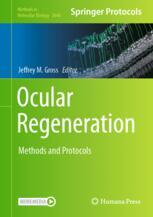
G. N. Stacey, T. Zhao
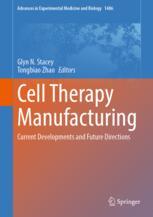
Cell Therapy Manufacturing
Current Developments and Future Directions
- Offers comprehensive 'soup to nuts' insight on cell therapies from concept to clinical practice
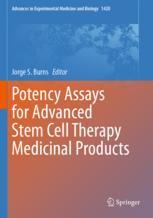
J. S. Burns
Potency Assays for Advanced Stem Cell Therapy Medicinal Products
- Provides the reader with the knowledge necessary to understand the successful development of potency assays

J. Gimble, B. Bunnell, T. Frazier, C. Sanchez
Adipose-Derived Stem Cells
Methods and Protocols
- Includes cutting-edge methods and protocols
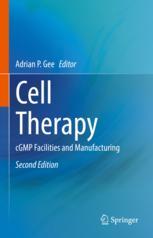
A. P. Gee
Cell Therapy
cGMP Facilities and Manufacturing
- Fully updated and expanded second edition reflects all recent developments and changes in the field
Journals

Phenomics
EiC Li Jin
- Phenomics provides an international forum for highlighting the cutting-edge scientific advances in the emerging field of phenomics
- Dedicated and professional editorial team to serve the authors
- No fee for online subscription publication
Current Medical Science
EiC Jian-guo Chen
- A platform for academic exchange between Chinese medical researchers and their foreign colleagues
- Published primarily in English
- Presents articles concerning the latest advances and experiences in biomedicine and clinical medicine
Cell Death & Differentiation
EiC Gerry Melino, Tak W. Mak
Official journal of the ADMC Associazione Differenziamento e Morte Cellulare
Cytotechnology
EiC Fei Chen, Francesco De Logu
Incorporating Methods in Cell Science International Journal of Cell Culture and Biotechnology
- Presents up-to-date developments, methods and techniques in cell culture research involving in vitro systems
- Describes applications of cell culture research in human and veterinary medicine, toxicology, animal and plant cell biotechnology
- Publishes original papers, reviews, short communications, meeting reports and book reviews
Stem Cell Reviews and Reports
EiC MD Ph.D. Mariusz Z. Ratajczak
- Thorough coverage of emerging issues in stem cells
- Includes embryonic and adult stem cells, and related lineage and cloning concerns
- Presents reviews covering clinical, regulatory and ethical aspects of stem cells
Open access
Serving the global research community with openness, rigor, quality, and transparency
Open access (OA) refers to the free, immediate, online availability of research outputs such as journal articles or books, combined with the rights to use these outputs fully in the digital environment. Publishing OA expands the reach of your research, fostering greater impact, visibility and usage of your work. Studies indicate that gold OA articles achieve significantly more downloads, citations, and Altmetric attention than non-OA articles.
You may be able to publish OA, with your fees covered, through one of Springer Nature’s many OA agreements. Alternatively, you can use our free OA funding and support service to find and apply for funding to cover your article processing charges (APCs) and/or book processing charges (BPCs).
Ultimately, serving the research community means research that’s open to all. And the only way to achieve full, immediate, and sustainable OA is by prioritising gold OA.
Below you’ll find a selection of OA journals that our editors have chosen as of particular interest for American Society for Cell Biology.
Journals
 Open Access
BMC Biology
EiC Graham Bell
- Publishes impactful research in all areas of biology
- Open access with high visibility for your work
- Hospitable publishing: portable peer review, scoop protection & more